One of the most common questions we receive from our engineering and construction partners is: “How much does ground improvement cost…just roughly?”
While it’s a fair question, the answer depends on several project-specific variables. As a longtime industry mentor once put it, “How much does it cost to build a building?” The point is that meaningful budgeting requires understanding the primary drivers that influence cost.
When evaluating ground improvement, three major factors typically determine overall project pricing:
- Geotechnical Conditions
- Structural Loading Demand
- Proposed vs. Existing Grading
Below is a closer look at each of these cost drivers.
Geotechnical Conditions
- Soil consistency and density
- Depth of unsuitable or compressible soils
- Required element stiffness and capacity
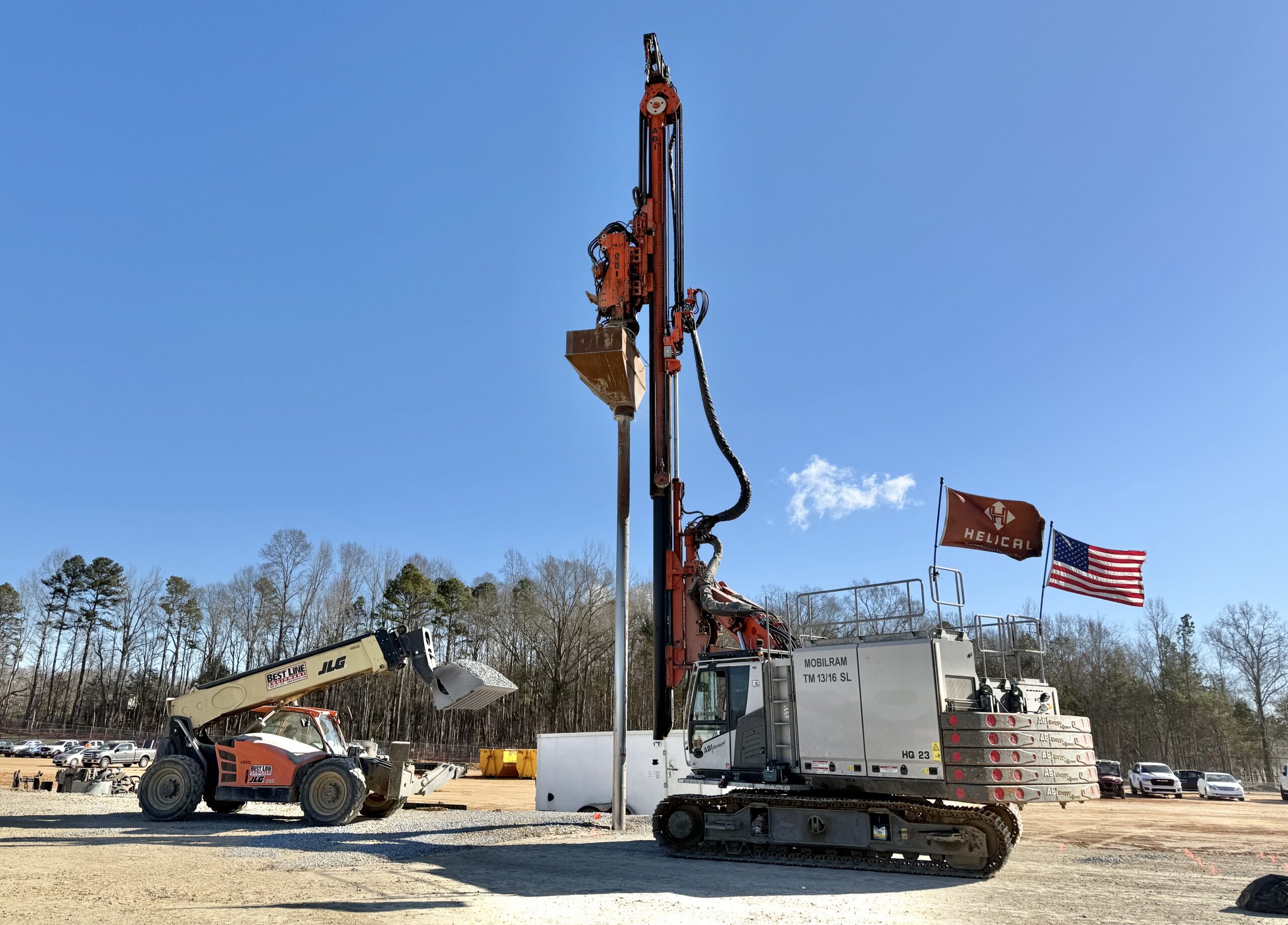
Because soil profiles vary widely from site to site, ground improvement costs can differ significantly, even for identical structures. For example, a mid-rise structure constructed over shallow uncontrolled fill may only require relatively short Rammed Aggregate Pier® (RAP) elements. However, the same structure built over deeper uncontrolled fill or compressible organic soils may require rigid inclusion systems such as grouted RAPs (GAPs) or GeoConcrete® Columns (GCCs), resulting in higher installation costs.
Structural Loading Demand
Structural loading requirements directly influence the quantity and spacing of ground improvement elements. Factors that impact loading demand include:
- Column loads
- Wall loads
- Slab loads
- Building use
Even when soil conditions remain consistent, structures with higher load demands typically require increased element density or higher-capacity solutions. For instance, a single-story retail structure imposes substantially less demand on subsurface soils than a multi-story office or mixed-use building, resulting in different ground improvement design requirements and costs.
Proposed vs. Existing Grading
Grading changes are often overlooked but can significantly affect ground improvement costs. Ground improvement systems must support all applied loads, including those created by grade-raise-fill. When site grading increases elevations, the added soil weight introduces additional stress on both the ground improvement elements and surrounding soils. For example, if the existing ground improvement working platform is at elevation 10 feet and the final floor elevation is 15 feet, the design must account for several feet of additional fill loading in addition to structural loads. This added loading can increase element depth, spacing, or capacity requirements.
Closing
Because ground improvement costs depend on site-specific geotechnical conditions, structural demands, and grading plans, early collaboration and preliminary evaluations can significantly improve cost forecasting and design efficiency. Our team regularly provides complimentary project reviews to help owners, developers, engineers, and contractors evaluate ground improvement options during early planning stages.