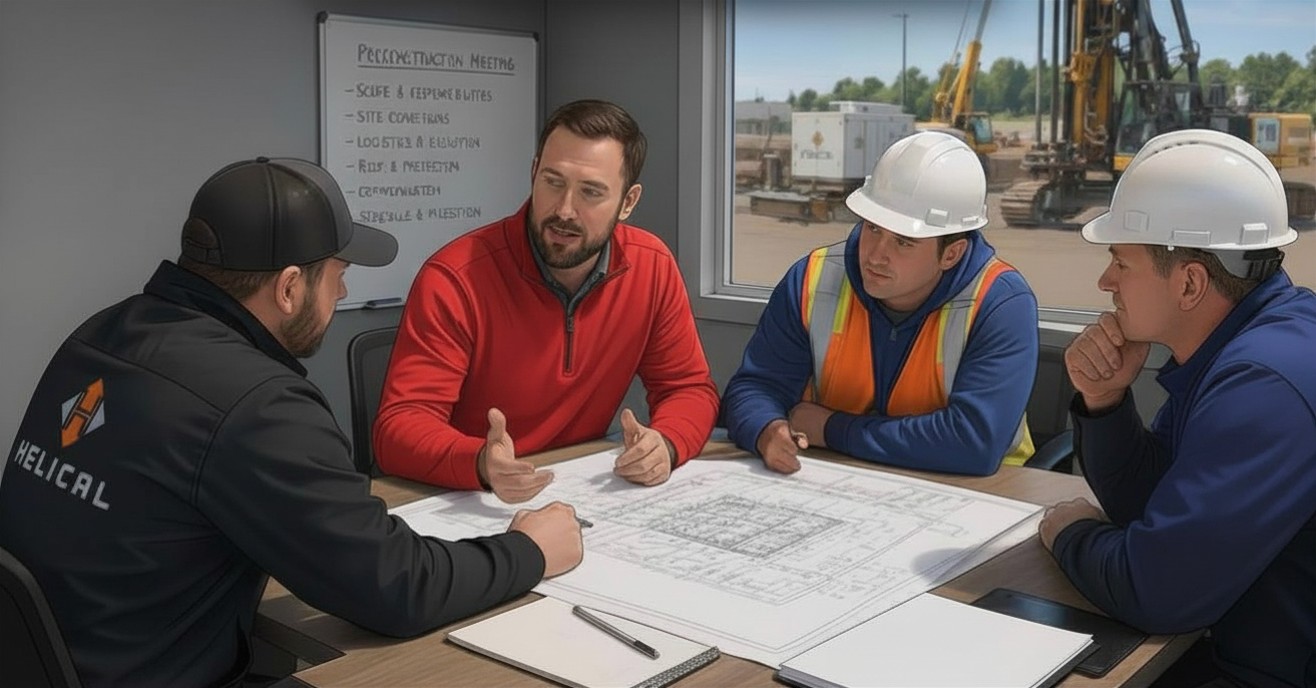
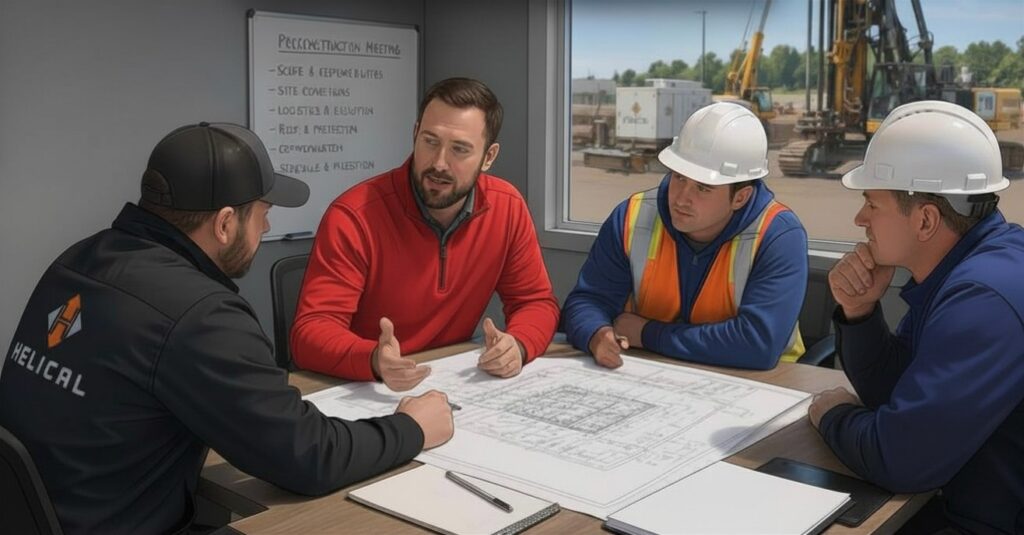
Many issues in geotechnical construction don’t come from the ground – they come from misaligned expectations that were never challenged early. Preconstruction meetings bring together the General Contractor, Geotechnical Contractor, Site Contractor, and Geotechnical Engineer – all critical players in a successful project. But too often, these meetings stay surface-level.
The goal isn’t just alignment – it’s to pressure-test assumptions. Silence in preconstruction often becomes costly problems in the field. The earlier issues are identified and debated, the less expensive and disruptive they are to resolve.
What Minimum Topics Should Be Covered?
At a minimum, discussions should clearly define scope, responsibilities, and risk ownership across the following areas:
Scope & Responsibilities
- Scope review, including load testing
- Submittal approval status
- Soil generation and management – by whom?
- Vibration or movement monitoring – by whom and thresholds?
Site Conditions & Preparation
- Backfilling requirements for site preparation
- Final Working Platform elevation and condition
- Obstructions – establish a clear plan and walk through scenarios
Logistics & Execution
- Anticipated crew size and equipment
- Work hours
- Laydown areas
- Water source
- Survey – by whom and when?
Risk & Protection
- Safety
- Protection of installed work
Communication & Decision Making
- Lines of communication to resolve issues
- Key decision-makers for cost-related items
- Schedule, work-forward plan, and key milestones
At Helical, we view preconstruction as one of the most important phases of any project – because getting it right early is the best way to avoid problems later.